

Post-operative Instructions
Dental Implant Home Care
The following instructions are intended to help you recover comfortably and optimize healing following your dental implant or periodontal surgical procedure. Mild discomfort, swelling, bruising, and limited bleeding are common during the initial healing period. Careful adherence to these instructions will help minimize complications and support the best possible outcome.
If you have any questions or concerns during your recovery, please contact our office at (425) 775-2002 during regular business hours.
Pain Medications
It is common to experience soreness or discomfort during the first several days following surgery, with some tenderness potentially lasting up to one to two weeks depending on the procedure performed.
Please take all prescribed medications exactly as directed. Pain medications are generally best tolerated when taken with food to help minimize nausea or stomach upset. In many cases, it is easier to stay ahead of discomfort by taking medication before the anesthetic completely wears off.
Some patients may alternatively achieve adequate discomfort relief using a combination of over-the-counter ibuprofen (Advil®, Motrin®) and acetaminophen (Tylenol®), if medically appropriate and approved by their physician.
Please note: If you are taking prescription medications containing acetaminophen (Tylenol®), such as Percocet®, Norco®, Hydrocodone®, Vicodin®, or Tylenol® with Codeine, do not take additional Tylenol-containing medications, as excessive acetaminophen intake may be harmful.
Please contact our office if your discomfort significantly worsens after the first several days or becomes difficult to manage with prescribed medications.
Antibiotics
Antibiotics may be prescribed depending on the type of procedure performed and your individual medical needs. Please notify our office of any medication allergies or sensitivities prior to taking prescribed antibiotics.
Take all antibiotics exactly as directed and continue the medication until completed unless otherwise instructed by our office. Antibiotics are often best tolerated with food.
For patients taking oral contraceptive medications, please note that certain antibiotics may reduce the effectiveness of birth control pills.
Swelling
Swelling is a normal part of the healing process and often peaks approximately 48–72 hours after surgery.
To help minimize swelling, apply an ice pack to the outside of the face near the surgical area for 20 minutes on and 20 minutes off during the first 48–72 hours following surgery.
Some bruising or stiffness of the jaw muscles may also occur and generally improves gradually over several days.
Bleeding
Minor bleeding or blood-tinged saliva is common during the first 24-48 hours following surgery.
If additional bleeding occurs:
- Do not rinse vigorously
• Keep your head elevated while resting
• Apply gentle but firm pressure with moistened gauze for approximately 20 minutes
• A moistened tea bag wrapped in gauze may also help reduce bleeding
• Avoid excessive physical activity or spitting
Please contact our office if bleeding becomes heavy, persistent, or difficult to control.
Diet
A softer diet is generally recommended during the early healing phase. Adequate hydration and nutrition are important for recovery and healing.
Recommended foods may include:
- Yogurt
- Soup
- Oatmeal
- Eggs
- Pasta
- Rice
- Mashed potatoes
- Cottage cheese
- Soft casseroles
- Smoothies or protein shakes
- Applesauce
- Fish
Until comfortable, avoid chewing directly on the surgical area. Extremely hot foods and beverages should also be avoided immediately following surgery.
Hard, crunchy, spicy, or seeded foods should generally be avoided during the initial healing period unless otherwise instructed by our office.
Smoking, Nicotine, Vaping, and Alcohol
Smoking, vaping, nicotine products, and marijuana use can significantly impair healing and greatly increase the risk of complications, delayed tissue healing, infection, graft loss, and dental implant failure. Patients should avoid all nicotine and inhaled products for a minimum of two weeks following surgery, though longer avoidance is strongly encouraged for optimal healing and long-term results.
Alcohol should not be consumed while taking prescription pain medications, sedatives, or antibiotics unless specifically approved by your physician.
Oral Hygiene and Rinsing
Do not rinse vigorously for the first 24 hours following surgery.
After the first day, gentle rinsing with a prescribed mouth rinse or warm saltwater solution may be recommended to help maintain cleanliness around the surgical site. Avoid forceful swishing, spitting, or manipulation of the surgical area during the early healing phase.
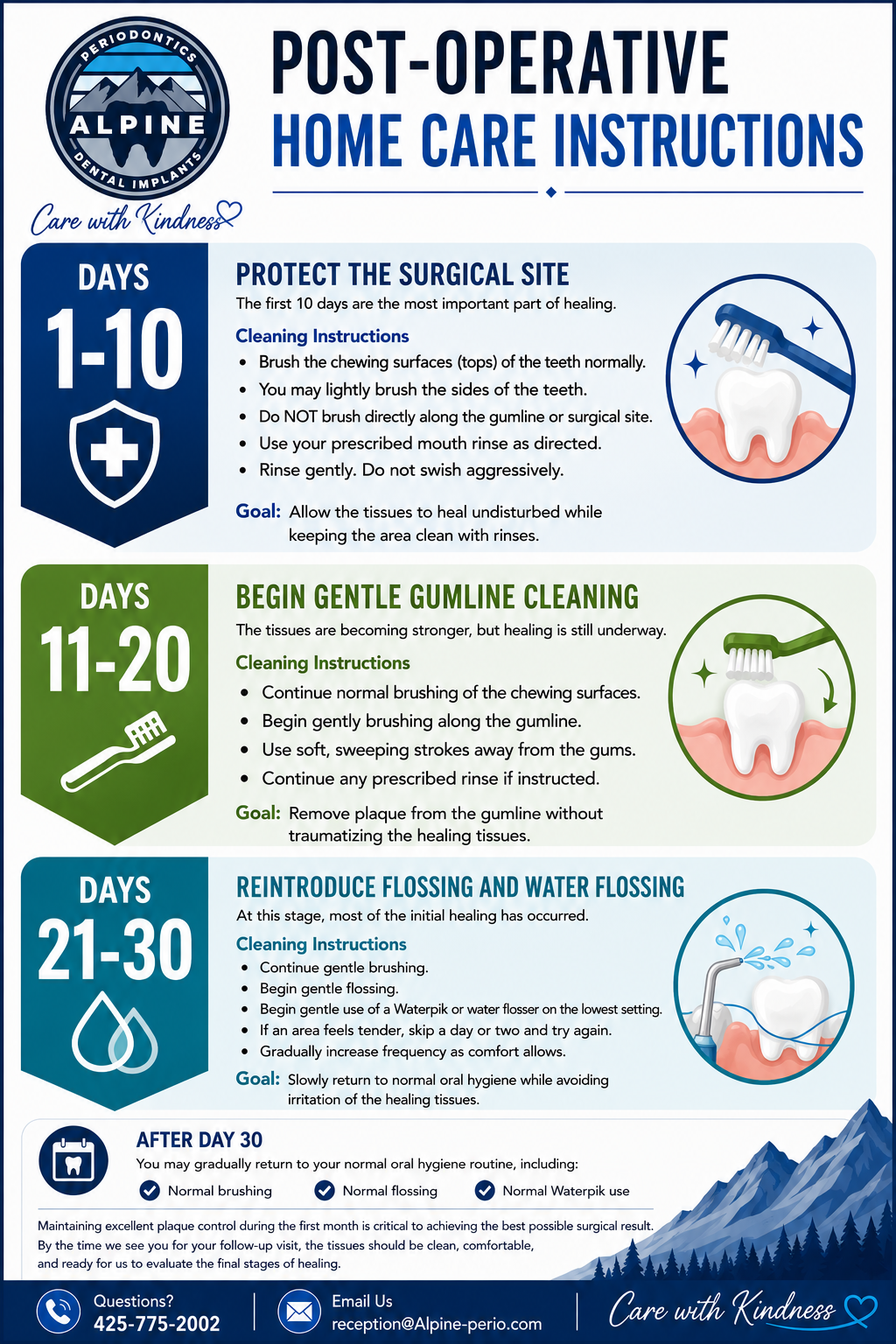
To help optimize healing and minimize disruption to the surgical site, oral hygiene is typically resumed gradually over the first several weeks following surgery:
- Days 1–10: Avoid brushing or flossing directly around the surgical site unless specifically instructed otherwise. Continue normal oral hygiene in untreated areas and use prescribed rinses as directed.
- Days 10–20: Gentle cleaning around the surgical area may gradually begin using an ultra-soft toothbrush or other aids recommended by our office. Care should remain light and non-traumatic.
- Days 20–30: Patients may slowly transition toward more routine brushing and oral hygiene measures as comfort and healing improve, unless otherwise directed.
Every procedure and healing response is unique, and individualized instructions may be provided depending on the type of surgery performed.
Sutures and Follow-Up Care
Tenderness may temporarily increase several days after surgery as swelling begins to resolve and tissues tighten around the sutures during healing.
Follow-up visits are extremely important and allow us to monitor healing, remove sutures when necessary, and ensure optimal recovery.
If antibiotic premedication is normally required for your dental treatment, please take it exactly as instructed prior to any post-operative appointment.
Contact Our Office
Should you have any questions, concerns, excessive discomfort, prolonged bleeding, swelling, or signs of possible infection, please contact our office promptly at (425) 775-2002.